Cheminformatics: an in-depth guide for beginners
Explore the power of cheminformatics in unveiling the secrets of molecules
17 min read
July 1st, 2023
Last updated: July 22nd, 2024

Introduction
Cheminformatics is an exciting and rapidly evolving field that combines the realms of chemistry, computer science, and data analysis.
It is a powerful discipline that unveils the secrets of molecules and plays a pivotal role in various industries, especially in drug discovery and pharmaceutical development.
In this in-depth guide for cheminformatics beginners, we will delve into the fundamentals of cheminformatics, exploring its interdisciplinary nature and understanding how it integrates chemistry, computer science, and data analysis to unlock the potential of molecules.
Definition of cheminformatics
To put it simply, cheminformatics is the application of computational methods and techniques to analyze and interpret chemical data.
It involves the use of computer algorithms, mathematical models, and data mining approaches to extract meaningful insights from vast amounts of chemical information.
By harnessing the power of computers and advanced analytical tools, cheminformatics enables researchers to explore chemical space, predict properties, and design new compounds with enhanced precision.
Overview of the interdisciplinary nature of cheminformatics
Cheminformatics represents the intersection of several disciplines, each contributing its unique expertise to the field.
Chemistry provides the foundation by supplying knowledge of molecular structures, chemical reactions, and properties.
Computer science plays a crucial role in developing algorithms, software tools, and computational models that enable the analysis and manipulation of chemical data.
Data analysis techniques, drawn from statistics and machine learning, empower cheminformatics by uncovering patterns, making predictions, and guiding decision-making processes.
By integrating these three domains, cheminformatics empowers researchers and scientists to navigate the complex world of molecules, transforming raw data into valuable insights that drive innovation in drug discovery, chemical engineering, materials science, and more.
Through the synergy of chemistry, computer science, and data analysis, cheminformatics serves as a powerful tool to accelerate scientific discovery and optimize the development of novel compounds.
The fundamentals of cheminformatics
Understanding chemical structures and their representation
In cheminformatics, one of the fundamental aspects is understanding chemical structures—the arrangement of atoms and bonds within a molecule.
Chemical structures provide critical information about the properties, behavior, and interactions of molecules, making them essential for drug discovery and other chemical applications.
To effectively analyze and interpret chemical structures, various representation methods are used, two of which are widely utilized: SMILES and InChI.
Simplified Molecular Input Line Entry System (SMILES)
SMILES is a string-based representation that encodes the structure of a molecule using ASCII characters. 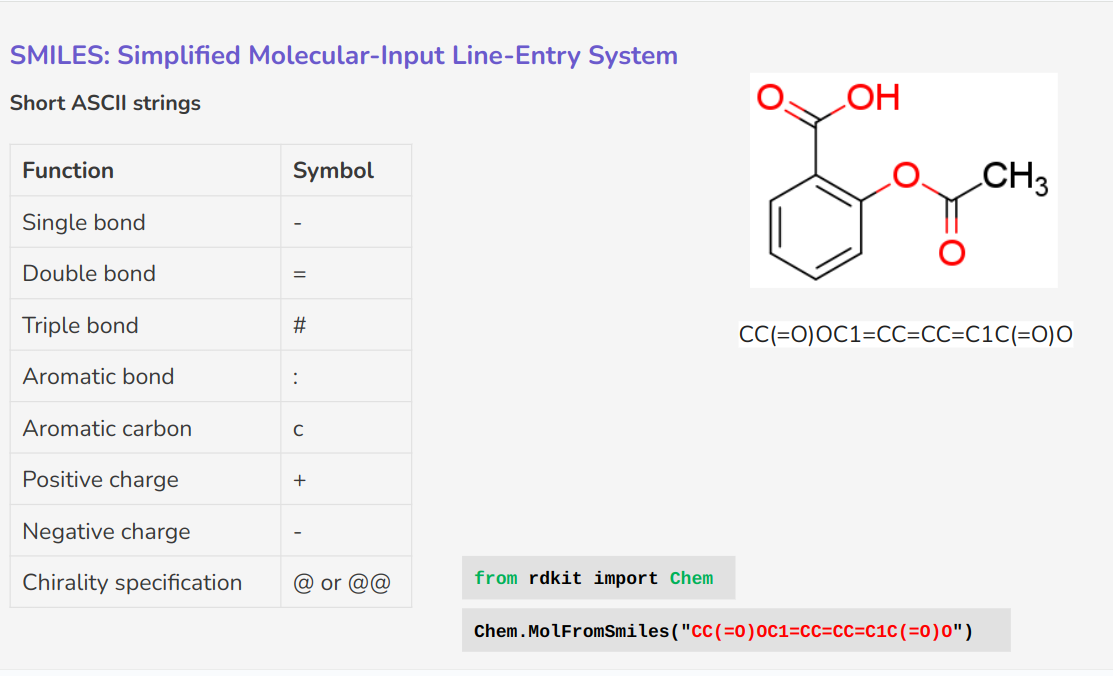
Image Source: Cheminformatics: Tools and Applications Course
It provides a compact and human-readable way to represent chemical structures. In SMILES notation, atoms are represented by their atomic symbols, and bonds are denoted by different symbols or numbers.
International Chemical Identifier (InChI)
InChI is a unique identifier that represents the structure of a molecule in a standardized format.
It provides a machine-readable and globally unique representation, ensuring that the same molecule will always have the same InChI regardless of the source.
InChI is hierarchical and consists of several layers, capturing different levels of structural information.
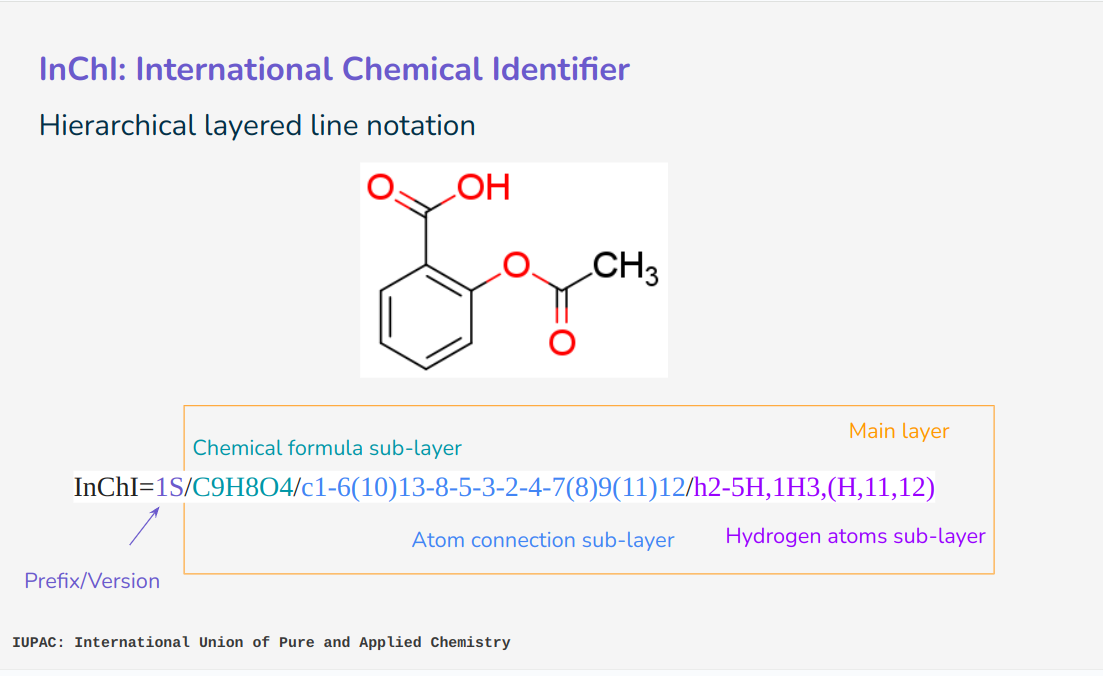 Image Source: Cheminformatics: Tools and Applications Course
Both SMILES and InChI notations enable the efficient storage, retrieval, and exchange of chemical structure information.
They are used in cheminformatics software, databases, and algorithms to perform tasks such as compound searching, similarity analysis, and virtual screening.
Understanding these representation methods is crucial for working with chemical structures in cheminformatics.
By leveraging SMILES and InChI, researchers and scientists can easily communicate, share, and analyze chemical structures across different platforms and applications.
In the upcoming sections, let's explore more fundamental concepts in cheminformatics, including chemical databases, libraries, and their role in accelerating drug discovery.
Exploring chemical databases and libraries
Chemical databases play a vital role in cheminformatics, providing a vast collection of chemical information that fuels research, drug discovery, and other chemical-related endeavors.
These databases serve as valuable resources, allowing scientists to access and analyze an extensive array of chemical structures, properties, and biological activities.
Let's delve into the importance of chemical databases in cheminformatics and explore some widely used examples.
Importance of chemical databases in cheminformatics
Chemical databases serve as repositories of chemical information, enabling researchers to explore, retrieve, and analyze vast amounts of data. They are essential for several reasons:
Compound searching and retrieval
Chemical databases allow researchers to search for specific compounds based on various criteria, such as chemical structure, substructure, properties, or biological activities.
These search capabilities facilitate the identification of potential drug candidates, exploration of chemical space, and comparison of compound libraries.
Structure-activity relationship (SAR) analysis
Chemical databases provide access to experimental or predicted data on compound activities, enabling the analysis of structure-activity relationships.
This analysis helps researchers identify patterns, correlations, and trends between chemical structures and their biological effects, facilitating the optimization of compound design and lead selection.
Virtual screening and similarity analysis
Chemical databases support virtual screening, a process where large compound libraries are computationally screened against a target of interest. This approach helps identify potential hits or leads for further investigation.
Additionally, databases enable similarity analysis, allowing researchers to find compounds similar to known active molecules or query compounds.
Data mining and knowledge discovery
Chemical databases are rich sources of data that can be subjected to data mining techniques to extract valuable insights. By analyzing patterns, trends, and relationships within the data, researchers can uncover new chemical insights, discover novel chemical motifs, or identify potential targets for drug discovery.
Examples of widely used chemical databases
There are numerous chemical databases available, each with its unique focus and content. Here are some widely used examples:
PubChem
PubChem, maintained by the National Center for Biotechnology Information (NCBI), is a comprehensive database of chemical compounds. It provides information on chemical structures, properties, bioactivities, and more. PubChem is freely accessible and serves as a valuable resource for researchers in various disciplines.
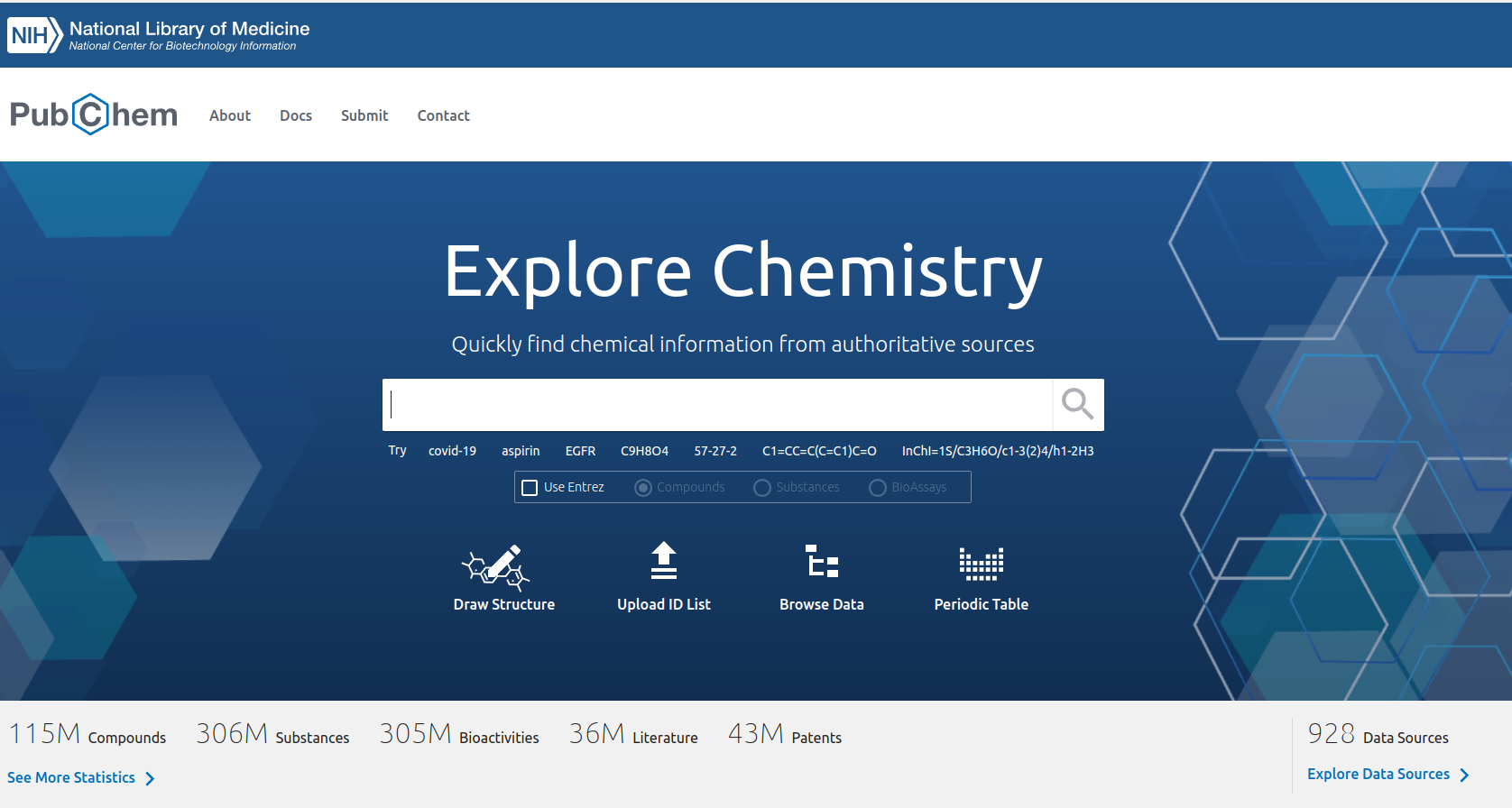 Image Source: Pubchem
ChEMBL
ChEMBL is a database of bioactive molecules with drug-like properties. It contains curated information on compound activities, target interactions, and other pharmacological data. ChEMBL is widely used in drug discovery and chemical biology research. 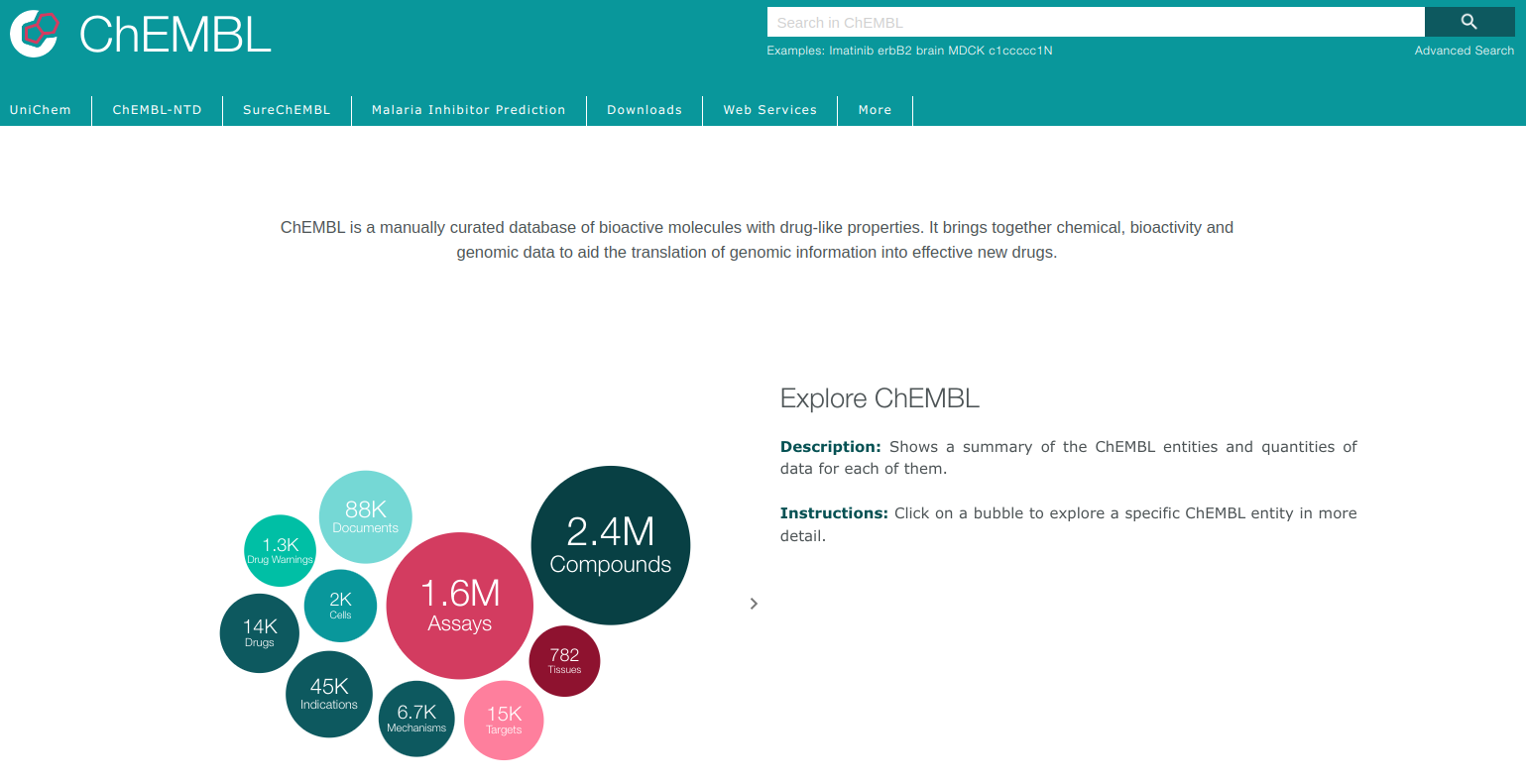 Image Source: ChEMBL
ChemSpider
ChemSpider, hosted by the Royal Society of Chemistry, offers a vast collection of chemical structures, properties, and related information. It is a freely accessible database that integrates with other tools and resources, supporting compound searching, data sharing, and collaboration. 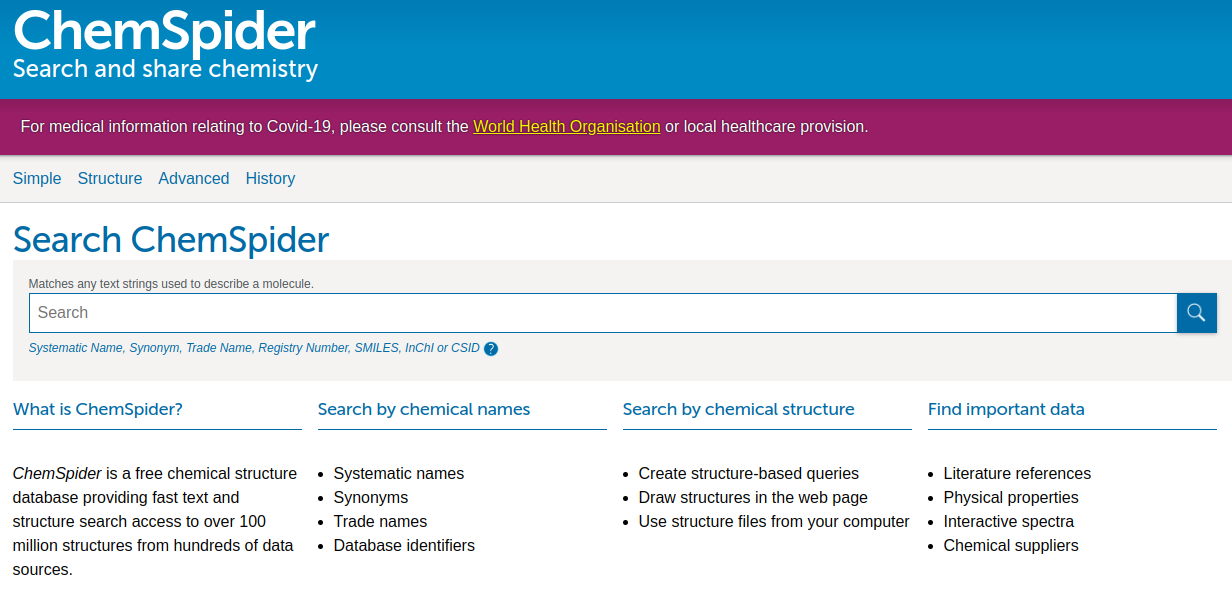 Image Source: ChemSpider
Zinc
Zinc is a commercial database that provides access to millions of purchasable compounds for drug discovery and chemical research.
It offers a diverse selection of compounds for virtual screening, compound procurement, and lead optimization. 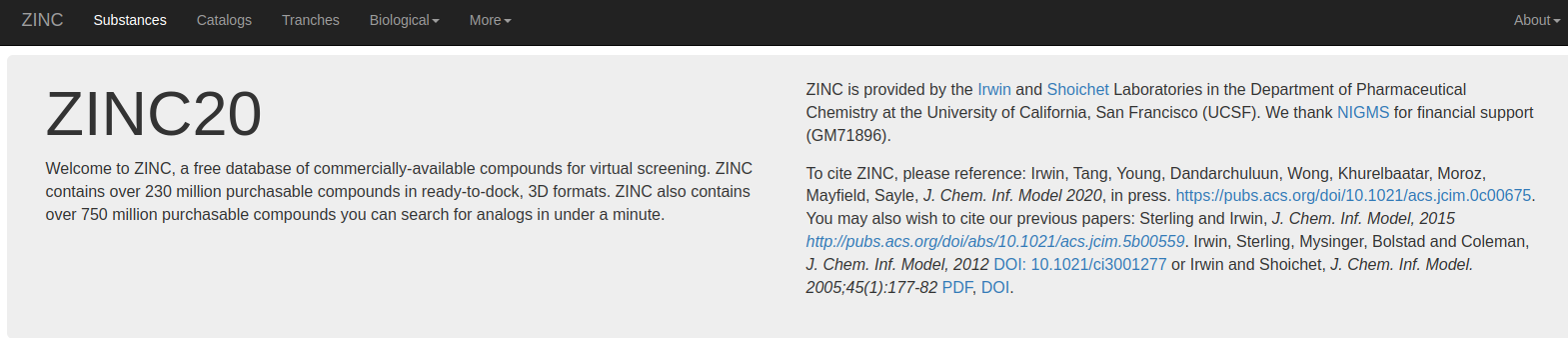 Image Source: Zinc Database
These are just a few examples of the many chemical databases available. Each database has its unique features, strengths, and focus areas, catering to different research needs within the field of cheminformatics.
Chemical databases empower researchers and scientists by providing a wealth of chemical information at their fingertips.
They are valuable tools that accelerate research, aid in compound discovery, and facilitate data-driven decision-making in the field of cheminformatics.
In the upcoming sections, we will explore how cheminformatics accelerates drug discovery, design new compounds, and optimize pharmaceutical development.
The Role of Cheminformatics in Drug Discovery
Accelerating the drug discovery process
The process of discovering new drugs is traditionally a time-consuming and costly endeavor. However, cheminformatics has revolutionized this process by offering powerful tools and techniques that accelerate drug discovery. In this section, let us explore key ways in which cheminformatics plays a vital role in speeding up the drug discovery process.
Utilizing cheminformatics for virtual screening and hit identification
Virtual screening is a computational technique employed in drug discovery to rapidly screen large libraries of compounds for potential hits or lead molecules that can be further developed to the approved drugs.
Cheminformatics plays a crucial role in virtual screening by leveraging diverse computational methods and algorithms. Here's how it works:
1. Compound databases and filtering: Cheminformatics utilizes chemical databases, such as those mentioned earlier, to access vast libraries of compounds. Through the use of filters and search criteria based on desired properties or structural features, cheminformatics narrows down the compound selection, focusing on those with the highest potential for activity against a specific target.
2. Molecular docking and binding prediction: Cheminformatics employs molecular docking algorithms to predict the binding of small molecules to target proteins or receptors. By simulating the interaction between compounds and target sites, cheminformatics can rank and prioritize compounds based on their predicted binding affinity. This helps identify potential hits for further experimental evaluation.
3. Machine learning and predictive models: Cheminformatics utilizes machine learning and predictive modeling techniques to build models that can classify compounds based on their likelihood of being active against a particular target. These models are trained on existing experimental data, allowing for the prediction of compound activity before experimental testing. This approach helps prioritize compounds and reduces the number of experiments required.
By employing these cheminformatics-driven approaches, virtual screening significantly accelerates the identification of potential hit molecules, enabling researchers to focus their efforts on the most promising candidates.
This saves time and resources by reducing the need for exhaustive experimental screening of large compound libraries.
Efficiently exploring chemical space using computational methods
Chemical space refers to the vast collection of all possible chemical compounds and their properties. Traditional experimental exploration of chemical space is impractical due to its enormous size.
However, cheminformatics offers computational methods that efficiently navigate and explore chemical space, aiding in the discovery of new compounds.
1. De novo drug design: Cheminformatics enables the computer-aided design of novel compounds through de novo drug design methods. By utilizing algorithms and machine learning approaches, cheminformatics can generate new compound structures that fit specific target requirements or optimize desired properties. This approach expedites the process of designing new compounds with desired characteristics.
2. Structure-activity relationship (SAR) analysis: Cheminformatics enables the analysis of structure-activity relationships by systematically exploring the relationship between the chemical structure of a compound and its biological activity. By studying SAR trends, cheminformatics can guide the design and optimization of compound libraries, focusing on regions of chemical space likely to yield active compounds.
3. Compound property prediction: Cheminformatics utilizes predictive models and computational methods to estimate various compound properties relevant to drug discovery, such as solubility, stability, bioavailability, and toxicity. These predictions help guide compound selection and optimization, reducing the number of compounds requiring experimental synthesis and testing.
By leveraging these computational approaches, cheminformatics allows researchers to efficiently explore chemical space, identifying compounds with desired properties and enhancing the success rate of lead optimization and hit-to-lead progression.
Predicting compound properties and optimizing drug-like characteristics
In addition to designing new compounds, cheminformatics plays a crucial role in predicting and optimizing compound properties and drug-like characteristics. Here's how cheminformatics contributes to this aspect:
1. Compound property prediction: Cheminformatics employs predictive models and computational methods to estimate various compound properties, such as solubility, stability, bioavailability, and toxicity. By leveraging available data and applying machine learning techniques, cheminformatics can provide valuable insights into the potential behavior and properties of compounds, enabling researchers to prioritize and optimize compound selection.
2. Optimization of drug-like characteristics: Cheminformatics facilitates the optimization of drug-like characteristics by guiding the modification and fine-tuning of compound structures. By analyzing structure-activity relationships, physicochemical properties, and molecular descriptors, cheminformatics can assist in making informed decisions regarding compound modifications to enhance drug-like properties such as potency, selectivity, metabolic stability, and oral bioavailability.
3. ADME/Tox prediction: Absorption, distribution, metabolism, excretion (ADME), and toxicity (Tox) properties play a crucial role in the success of drug candidates. Cheminformatics leverages computational models and databases to predict ADME/Tox properties, providing early assessments of a compound's likelihood of success or potential risks. This information helps researchers prioritize and optimize compounds with favorable ADME/Tox profiles.
By incorporating cheminformatics in compound property prediction and optimization, researchers can make informed decisions early in the drug discovery process, reducing costs, and increasing the efficiency of lead identification and optimization.
Optimizing pharmaceutical development with cheminformatics
Predictive modeling and property prediction
In the field of pharmaceutical development, cheminformatics plays a crucial role in optimizing the process by employing predictive modeling and property prediction techniques.
These approaches enable researchers to make informed decisions and prioritize compounds with desirable characteristics.
In this section, we will explore two key aspects of cheminformatics in optimizing pharmaceutical development: quantitative structure-activity relationship (QSAR) modeling and predicting the physicochemical and pharmacokinetic properties of compounds.
1. Using cheminformatics for quantitative structure-activity relationship (QSAR) modeling
QSAR modeling is a cheminformatics approach that relates the chemical structure of a compound to its biological activity. It involves the development of mathematical models that quantify the relationship between structural features and compound activity. Cheminformatics enables the implementation of QSAR modeling through the following steps:
a. Dataset preparation: Cheminformatics involves the curation and preparation of datasets comprising compounds with known activities against a specific target or biological endpoint. These datasets contain information about the chemical structures of the compounds and their corresponding activity values.
b. Descriptor calculation: Cheminformatics calculates molecular descriptors, which are numerical representations that capture various structural and physicochemical properties of compounds. These descriptors serve as the input features for QSAR modeling and provide quantitative information about the compounds' characteristics.
c. Model development and validation: Cheminformatics employs statistical and machine learning techniques to develop QSAR models based on the calculated descriptors and activity data. These models capture the relationship between the descriptors and the compound activities, enabling predictions for new compounds. The models are validated using statistical measures and cross-validation techniques to ensure their reliability and predictive power.
By leveraging cheminformatics for QSAR modeling, researchers can gain insights into the structure-activity relationship of compounds, prioritize lead compounds, and guide the design of new compounds with enhanced activity against specific targets.
2. Predicting physicochemical and pharmacokinetic properties of compounds
In pharmaceutical development, understanding the physicochemical and pharmacokinetic properties of compounds is crucial for optimizing their efficacy, safety, and pharmacological profiles.
Cheminformatics enables the prediction of these properties using computational models and algorithms. Here's how it works:
a. Physicochemical property prediction: Cheminformatics employs computational methods to estimate various physicochemical properties of compounds, such as solubility, lipophilicity (logP), molecular weight, hydrogen bonding, and acidity/basicity.
These predictions provide valuable insights into a compound's behavior in biological systems, formulation requirements, and potential challenges in drug development.
b. Pharmacokinetic Property Prediction: Cheminformatics facilitates the prediction of pharmacokinetic properties, which describe the absorption, distribution, metabolism, and excretion (ADME) of compounds in the body.
These properties include bioavailability, clearance, volume of distribution, and half-life. Predicting pharmacokinetic properties helps researchers assess a compound's potential for successful drug development, optimize dosage regimens, and predict potential interactions or toxicity concerns.
By utilizing cheminformatics for predicting physicochemical and pharmacokinetic properties, researchers can prioritize compounds with desirable profiles and make informed decisions during the lead optimization and candidate selection phases of pharmaceutical development.
In the upcoming section, we will explore the broader applications of cheminformatics in deep-tech industries, including molecular drug discovery using AI/ML and computational methods.
Drug formulations and delivery systems optimizations with cheminformatics
Rational drug formulation and optimization are essential for enhancing drug efficacy, patient compliance, and therapeutic outcomes.
Cheminformatics plays a significant role in this process by providing insights and tools for designing optimized drug formulations and delivery systems. Here's how cheminformatics can be leveraged:
a. Formulation design: Cheminformatics enables the design and selection of suitable excipients, additives, and formulation components based on their compatibility with the drug compound.
By analyzing the chemical and physical properties of both the drug and the formulation components, cheminformatics helps in formulating stable and effective drug products.
b. Drug delivery system optimization: Cheminformatics aids in the optimization of drug delivery systems, such as nanoparticles, liposomes, and micelles.
By considering factors like drug solubility, stability, release kinetics, and target site characteristics, cheminformatics assists in the selection and design of delivery systems that improve drug bioavailability, control release profiles, and enhance therapeutic outcomes.
c. Predictive modeling for drug formulation: Cheminformatics utilizes predictive models and computational methods to estimate and predict important formulation parameters, such as drug-excipient compatibility, drug solubility in different solvents, and physicochemical properties relevant to formulation development.
These predictions guide the selection of appropriate formulation strategies and aid in efficient and cost-effective formulation development.
By incorporating cheminformatics in rational drug formulation and optimization, researchers can design and develop formulations that enhance drug stability, solubility, bioavailability, and delivery efficiency, leading to improved therapeutic outcomes and patient satisfaction.
Designing prodrugs and improving drug solubility using cheminformatics
Prodrugs and improved drug solubility are two critical aspects of pharmaceutical development that cheminformatics can effectively address. Cheminformatics offers valuable tools and methods for designing prodrugs and enhancing drug solubility. Here's how it contributes:
a. Prodrug design: Cheminformatics facilitates the design of prodrugs, which are biologically inactive or less active compounds that undergo enzymatic or chemical transformations in the body to release the active drug. By analyzing structure-activity relationships, metabolic pathways, and physicochemical properties, cheminformatics helps identify suitable functional groups or modifications that can enhance prodrug stability, bioconversion rates, and target specificity.
b. Solubility enhancement: Cheminformatics aids in improving drug solubility, which is crucial for optimal drug absorption and bioavailability. By predicting solubility parameters, identifying solubilizing excipients, and employing computational models, cheminformatics assists in selecting appropriate formulation strategies, such as cosolvency, solid dispersion, and lipid-based formulations, to enhance drug solubility and dissolution rates.
c. Data-driven approaches: Cheminformatics leverages data-driven approaches, such as quantitative structure-property relationship (QSPR) modeling and machine learning algorithms, to predict drug solubility and identify molecular descriptors or features that correlate with solubility.
These data-driven approaches enable researchers to prioritize compounds with favorable solubility profiles and guide formulation strategies for challenging drug candidates.
By harnessing the power of cheminformatics in designing prodrugs and improving drug solubility, pharmaceutical researchers can overcome formulation challenges, enhance drug delivery, and optimize therapeutic efficacy.
Cheminformatics is the most in-demand skill in modern drug discovery
This online certification course teaches the end-to-end implementation of cheminformatics tools and its applications in drug discovery and development
- Covers the entire cheminformatics pipeline
- Equips you with all the tools and concepts
- Tackle real-world cheminformatics projects
The future of cheminformatics
Emerging trends and advancements
1. Integration of artificial intelligence and machine learning in cheminformatics
The field of cheminformatics is experiencing a rapid evolution driven by advancements in artificial intelligence (AI) and machine learning (ML). These technologies are revolutionizing how chemical data is analyzed, interpreted, and utilized for drug discovery and other applications. Here's an overview of the integration of AI and ML in cheminformatics and its potential impact:
a. Predictive modeling and property prediction: AI and ML techniques are being leveraged to develop more accurate and robust predictive models for estimating various molecular properties and activities.
By training on large datasets of chemical structures and corresponding experimental data, these models can predict properties such as potency, solubility, toxicity, and biological activity, aiding in compound prioritization and optimization.
b. Virtual screening and compound selection: AI and ML algorithms enable efficient virtual screening of vast chemical libraries to identify potential drug candidates.
By learning from known active compounds and their structural features, these algorithms can predict the likelihood of compounds having desired activity against a specific target.
This accelerates the early stages of drug discovery by narrowing down the search space and focusing resources on the most promising candidates.
c. De novo drug design: AI and ML techniques facilitate the generation of novel compounds through de novo drug design.
By combining data-driven insights, generative models, and optimization algorithms, researchers can explore and optimize chemical space to design molecules with desired properties and functionalities.
This approach expedites the discovery of novel chemical scaffolds and enhances the exploration of innovative drug candidates.
d. Big data analysis and knowledge extraction: The integration of AI and ML enables the extraction of meaningful insights from large-scale chemical and biological datasets.
By employing advanced algorithms, researchers can identify patterns, correlations, and hidden relationships in complex data, leading to new discoveries, target identification, and optimization strategies.
e. Drug repurposing and polypharmacology: AI and ML algorithms are instrumental in identifying new therapeutic indications for existing drugs through drug repurposing.
By analyzing molecular similarities, network analysis, and data integration, these algorithms can uncover potential off-target effects and repurpose drugs for new disease indications.
Additionally, AI-driven approaches aid in understanding polypharmacology, the interaction of drugs with multiple targets, leading to the development of multi-targeted therapies.
The integration of AI and ML in cheminformatics offers exciting possibilities for accelerating drug discovery, optimizing compound selection, and expanding our understanding of chemical space.
By harnessing the power of these technologies, researchers can unlock new opportunities for innovation, streamline research processes, and uncover novel therapeutic interventions.
The future of cheminformatics is poised to witness further advancements in AI and ML, paving the way for more accurate predictive models, improved virtual screening techniques, and sophisticated de novo drug design strategies.
These developments hold great potential to reshape the drug discovery landscape and contribute to the development of safer, more effective drugs.
2. Role of big data analytics in advancing cheminformatics
The future of cheminformatics is closely intertwined with the advancements in big data analytics. The exponential growth of chemical and biological data, coupled with the increasing availability of open data repositories, presents opportunities to extract valuable insights and drive innovation in the field.
Here's a closer look at the role of big data analytics in advancing cheminformatics:
a. Data integration and knowledge discovery: Big data analytics enables the integration of diverse datasets from various sources, including chemical databases, literature, experimental results, and omics data. By leveraging advanced data integration techniques, cheminformaticians can gain a holistic understanding of chemical structures, activities, and relationships. This facilitates knowledge discovery, the identification of novel patterns, and the generation of hypotheses for further exploration.
b. High-throughput screening and data mining: With the advent of high-throughput screening technologies, vast amounts of data on compound activities and properties can be generated. Big data analytics enables efficient mining and analysis of these datasets to identify relationships, trends, and structure-activity patterns. This information can guide compound prioritization, virtual screening, and optimization strategies in drug discovery.
c. Network analysis and systems pharmacology: Big data analytics provides tools and methodologies for network analysis and systems pharmacology. By analyzing complex networks of molecular interactions, pathways, and drug-target relationships, researchers can uncover emergent properties, identify key targets, and predict drug effects. This systems-level understanding enhances the design of multi-targeted therapies and aids in the development of personalized medicine approaches.
d. Predictive analytics and decision support: Big data analytics empowers cheminformaticians to build predictive models and decision support systems. By utilizing machine learning algorithms and statistical techniques, researchers can develop models to predict compound properties, toxicity, ADME (absorption, distribution, metabolism, and excretion) properties, and even clinical outcomes. These predictive models assist in compound selection, optimization, and risk assessment, ultimately guiding informed decision-making in the drug discovery process.
e. Data privacy and security: As the volume and complexity of chemical data grow, ensuring data privacy and security becomes increasingly crucial. Big data analytics plays a pivotal role in developing robust data governance frameworks, anonymization techniques, and secure data-sharing protocols. These measures protect sensitive information while facilitating collaboration and knowledge sharing among researchers and organizations.
The role of big data analytics in cheminformatics is poised to expand further, as the volume and diversity of chemical and biological data continue to increase. By harnessing the power of big data, researchers can uncover valuable insights, develop predictive models, and make data-driven decisions to accelerate drug discovery, optimize compound selection, and advance our understanding of complex biological systems.
At Neovarsity, we recognize the significance of big data analytics in the future of cheminformatics. Our educational programs will equip you with the skills to effectively utilize big data analytics techniques and leverage the immense potential of data-driven approaches in deep tech industries.
Conclusion and next steps
Throughout this in-depth guide for cheminformatics beginners, we have explored the fundamental aspects, applications, and future trends of this interdisciplinary field.
Cheminformatics plays a crucial role in accelerating drug discovery, designing new compounds, and optimizing pharmaceutical development.
By combining the principles of chemistry, computer science, and data analysis, cheminformatics empowers researchers to make informed decisions, streamline processes, and uncover valuable insights from vast amounts of chemical and biological data.
We discussed how cheminformatics aids in understanding chemical structures and their representation methods, exploring chemical databases and libraries, and leveraging computational methods for virtual screening and hit identification.
We also explored how cheminformatics enables the design of new compounds through computer-aided approaches, predicting compound properties, and optimizing drug-like characteristics.
Furthermore, we examined how cheminformatics contributes to predictive modeling, property prediction, rational drug formulation, and optimization in pharmaceutical development.
The integration of cheminformatics in these areas enhances decision-making, improves efficiency, and ultimately leads to the discovery and development of safer and more effective drugs.
As we conclude this exploration of cheminformatics, we invite you to delve deeper into this fascinating field.
The significance of cheminformatics in the deep tech industries, especially in drug discovery and pharmaceutical development, cannot be overstated.
It continues to drive advancements and revolutionize the way we approach complex challenges in these fields.
By embracing cheminformatics, you can unlock new opportunities for innovation, contribute to the discovery of life-saving drugs, and shape the future of deep tech industries.
Whether you are a student, researcher, or industry professional, Neovarsity offers a range of educational programs designed to nurture and enhance your skills in cheminformatics.
Stay curious, stay dedicated, and stay connected with the latest developments in cheminformatics. Together, let us explore the exciting frontiers of this field, leverage its potential, and make a meaningful impact on the future of drug discovery and pharmaceutical development.
Remember, at Neovarsity, we are here to support and guide you on this exhilarating journey.
Cheminformatics is the most in-demand skill in modern drug discovery
This online certification course teaches the end-to-end implementation of cheminformatics tools and its applications in drug discovery and development
- Covers the entire cheminformatics pipeline
- Equips you with all the tools and concepts
- Tackle real-world cheminformatics projects